The Five British Virtues
An Alternative to Silly Sausage Britain

Explaining a joke, E B White noted, is much like dissecting a frog. You understand it better but it kills the frog. At times, it feels like explaining a country’s culture has similar effects. This is, nevertheless, a temptation which appears irresistible to flailing politicians. This September, Keir Starmer managed to one-up John Major’s faintly bathetic description of England as a land of ‘long shadows on county cricket grounds’ and `old maids bicycling to Holy Communion through the morning mist’ by evoking a country built on ‘painting a fence, running the raffle, cutting the half-time orange, or even just that gentle knock on the door that checks your neighbour is alright1’. In fairness to the man, this doesn’t seem to have been an intentional and lovingly-crafted insult aimed at Britain, as he appears to have previously reduced three thousand years of Jewish lived experience to a vague desire to roll your sleeves up, check in on stakeholders and Lend a Hand Yeah.
The only remote positive about this tendency in politicians is that when a similar temptation hits journalists it hits them far worse. Every six months or so, the Great British Public is momentarily united by mute and uncomprehending horror as another listicle of One Hundred Bloody Brilliant Bonkers British Things written by somebody twisted by 2010s comedy panel shows and that Very British Problems account on Twitter into a grotesque parody of an actual human is unleashed, like something truly nasty momentarily breaching the surface of a stagnant swamp.
The real recent trailblazer in this regard was a 2024 Guardian article on the rise of “Britishcore”, which selected a hundred experiences supposedly universal to modern Britons: it says much about the expectations of the author that one of them was the discovery that your father harboured the same sentiment towards Kevin McCloud off Grand Designs that Aschenbach does towards the beautiful Polish youth in Death In Venice; it says much more about the author that this barely makes it into the top five most mystifying inclusions. This was followed by a list the Metro shat out as a rebuttal of Starmer’s speech suggesting that things like “niche, ridiculous and downright harsh insults peppered into conversations with anyone and everyone e.g. melt, nonce, c***womble [sic]” and “Mums’ obsession with picky teas2 as soon as the sun comes out” were more indicative of universal British experiences than all that rigmarole around half-time oranges and fences.
This tendency culminated this week in an article which so closely approaches the Platonic ideal of the We’re All Melts Haha Piece that I can fairly confidently say that it’ll never be bettered. “Mr Blobby patriotism”, an encomium for “Silly Sausage Britain” penned for what was once a Blairite intellectual clearing house by a woman whose Twitter bio exhorts the reader to “eat pizza”, is a perfect specimen of its type. It defies summary. I’m not going to quote it because, frankly, it needs (like so much of life) to be experienced in its totality to grasp its full gnawing horror. Suffice it to say that, in opposition to a divided Britain where “Tommy Robinson [can] march through London”, the author posits a “Silly Sausage Britain” built upon a kaleidoscopic list of iconic ads and moments in early 2010s reality television rather reminiscent of that forty page stretch in House of Leaves which is just a list of architectural terms and having a similar effect of the reader.
One of the commonalities to all articles of this type is just how much Godawful TV figures in each list. It’s slightly slept on amid all the (merited) online criticism of Boomers, but Early Millenials appear to have been similarly mindbroken by the Idiot Box. To the extent that Zoomers spend their time on TikTok watching videos with unrelated Minecraft gameplay footage at the bottom, this is frankly an improvement. Another is the only somewhat ironic embrace of shoddiness and naffness, and the complete lack of interest in anything beautiful or even functional. If you’re in your late thirties (I assume most of the people writing and agreeing with these sentiments are around this age) your entire adult lives have been pretty ghastly and are going to get worse over the next few years. Presumably, if you’re writing for a Blairite think tank, you have to more or less reconcile yourself to this, and this is a neat way to do this psychologically.
The sheer silliness of these articles and the fact that they do sort of unite Online Britain in the opprobrium poured upon each from every part of the political spectrum means they can be disregarded to an extent, at least in comparison to the much more sinister attempts by politicians to limn Britain in terms of abstract values. Lying at the heart of every speech or initiative about these, like the blind idiot god Azathoth at the centre of Lovecraft’s universe, is the Brown Hand of Civic Virtue: a set of frankly incoherent values collated by either Prevent or the Fabian Society (I’ve heard cases put forward for both) recently enough that my parents almost certainly have food in their freezer older than them.
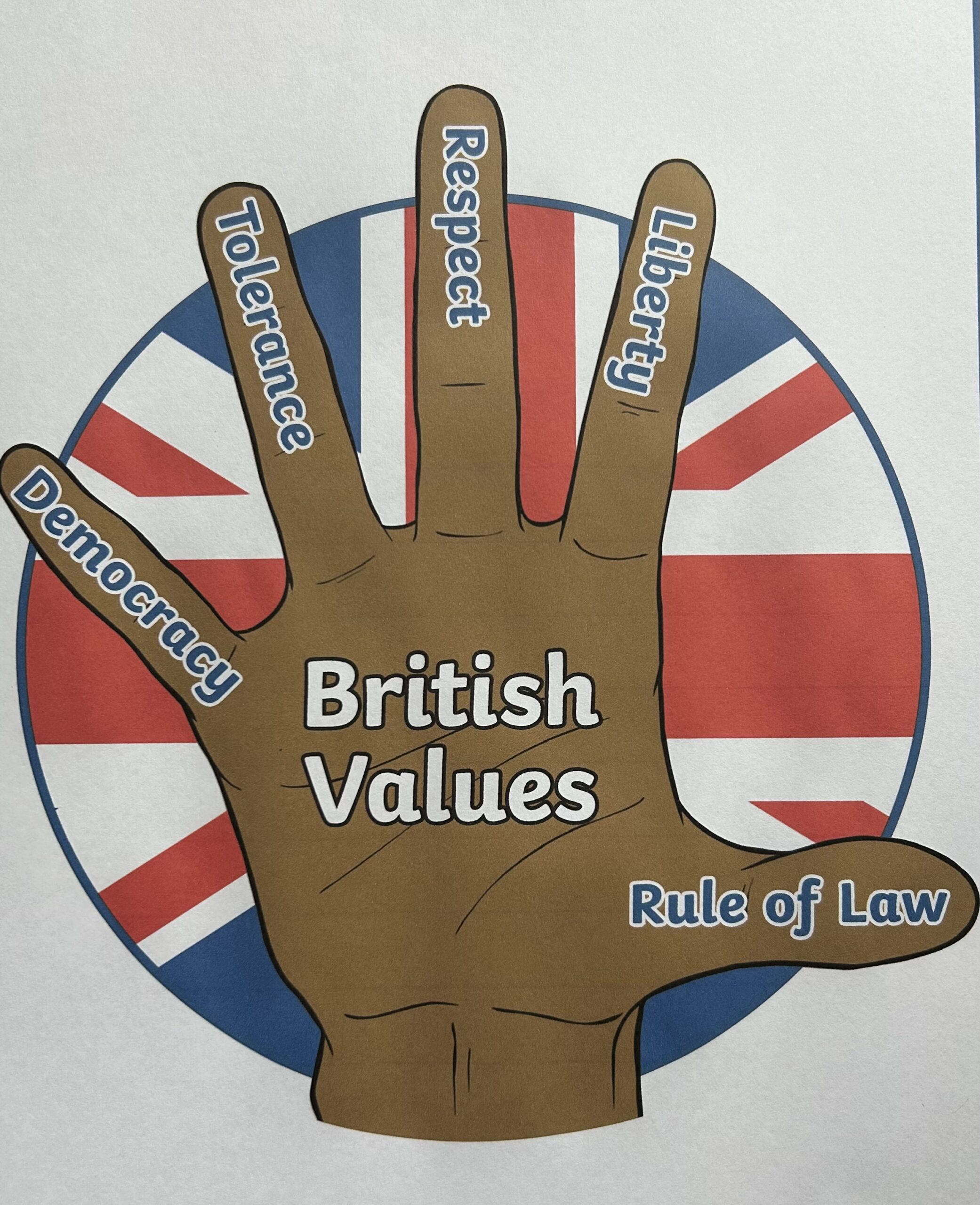
Even if they weren’t quite so stupid or so equally applicable to every other country in the Global North, the idea of basing any sort of patriotism whatsoever around “values” is ludicrous. Enoch Powell’s statement to a mystified Margaret Thatcher that values existed in a transcendental and Platonic realm and could neither be fought for nor destroyed is, to my mind, unanswerable.
I take a different approach. As someone removed from exclusive Britishness enough to think of myself more or less as an extremely well-disposed paying guest here (by which I mean I try to clean up after myself, don’t criticise my hosts’ cooking even when they really deserve it and CERTAINLY don’t try to invite other people in) I’ve spent most of my life in the position of a semi-detached observer, and have come to identify - in preference to Five British Values - the Five British Virtues that I admire the most.
1. An aversion to the Grindset
When, last Christmas, that Indian pharma scammer managed to talk his way out of Trump’s inner circle with a deranged series of rants on Twitter about how Americans were all having sleepovers and watching Saved By The Bell instead of ostentatiously STUDYING HARD MATHEMATIC, he was expressing a sentiment that the British more or less monolithically find revolting. In every job I’ve had where people have occasionally had to work weekends to close a deal or something, they’ve always come up with mildly self-deprecating excuses later (“my in-laws were visiting” or “I was too hungover to do anything else”) to absolve themselves of having visibly worked hard. This British sprezzatura, a feeling that if something’s worth doing it’s worth doing effortlessly, is their trait that I find most endearing.
2. A stubborn refusal to admit to self-pity
At its worst, this manifests in a Paddingtonian “mustn’t grumble” tweeness about uncomplainingly queueing. At its best, this takes the form of a wry acceptance of Fate, a feeling that Life is essentially a game and - while, like most games, it ought to be contested seriously - you inevitably lose some games and the best thing you can do in those circumstances is lose with grace.
3. Unstudied eccentricity (and a genuine tolerance for unstudied eccentricity in others)
Like all of the traits here, this is repulsive if engaged in self-consciously (the execrable “Lord Buckethead”, a failed BBC comedian wheeled out at each election in an attempt to humiliate whichever prominent politician is currently out of favour, being the most obvious example), but delightful if it arises from a deep unconscious desire to march to the beat of your own drum. In my experience, the British are remarkably kindly to those fortunate people propelled by their own cast-iron sense of logic that doesn’t quite match everyone else’s.
4. A fondness for acquaintanceship rather than friendship
This is how the British have attained a (rather unfair) reputation for phlegmatic unconcern, bordering on coldness, on the Continent. In reality, this is a good-humoured acceptance of every man’s right to struggle with life as best he sees fit without having to fear a gentle knock on his door from the prying meddlesome ratbag whose house abuts his. Crowley, that most English of occultists, writes in Magick without Tears that “EVERY MAN AND EVERY WOMAN IS A STAR. That is to say, every human being is intrinsically an independent individual with his own proper character and proper motion.” The British have taken this to heart.
5. A certain inner restlessness
One of the more encouraging political developments within the British Right in the last few years is an almost complete abandonment of that Postliberal school of thought that characterised the British as essentially Hobbits, content with perpetually pottering about their kitchen gardens in bucolic surroundings of what would be staggering dullness after six months of living there. In reality, the British are almost universally animated by a slight dissatisfaction with their daily rounds, and how they deal with this dissatisfaction manifests differently in each. The mid-twentieth century woman who threw herself into amateur dramatics, the nineteenth century country parson whose exhaustive nature diaries ended up forming part of the evidence for natural selection, and the eighteenth century Stoke-on-Trent lad who died a East India Company nabob with a palace and harem and team of elephants were all animated by the same inner wanderlust that has scattered Britons to every corner of the globe (you don’t accumulate an empire unless you’re easily bored otherwise) and will one day seed the galaxy with them.
All these virtues are present in other races to a greater or lesser extent, of course - the Italians can go toe to toe with the British on the sprezzatura front while I suspect the Nordics have them beaten on the acquaintance one - but in no other group does this precise combination exist, and the British ought to be intensely proud of this.
Writing this, it occurred to me that these virtues are all essentially the virtues of schoolboys - what George Santayana describes as the essential boyishness of the British national character is the sort of thing that naturally develops when generations of boys are sent away from home at eight and are forced to somehow preserve their individuality within a corporate entity while getting along with everyone without committing themselves too far emotionally in any direction. If so, they are virtues that will stand the British in good stead if and when the situation deteriorates here; I strongly suspect that any collapse of civil society will see them come to the forefront again in short order. Whatever horrors may emerge, an essentially good-humoured people prepared - in the last instance - to approach Remigration (“Remmy G”, as the people writing those listicles will undoubtedly ultimately refer to it) or even ethnic cleansing (“ethny clenny”?) in the same spirit in which a cricket match is played in the dying light of a Summer afternoon are likely to take on all comers and win.
Without going into too much detail, I have some neighbours whose gentle knock at my door would be met with a lethal response if I felt I could plausibly argue self-defence or even talk my way into a Tony Martin-sized sentence.
I am deeply grateful that I have spent my entire life on the better side of the Watford Gap service station and consequently was shielded from the existence of the “picky tea” until relatively recently.
I must begrudgingly subscribe as this is Very Good but I will never forgive you for making me Google "picky tea”.
Also I'm pretty sure “old maids cycling” etc is George Orwell but I'm too lazy to open another tab to check, which I like to think is a kind of British virtue in its own right.
I verified my age by unbuttoning my camera and hoisting a middle finger in the face of my presuming MI6 surveyor for this?